
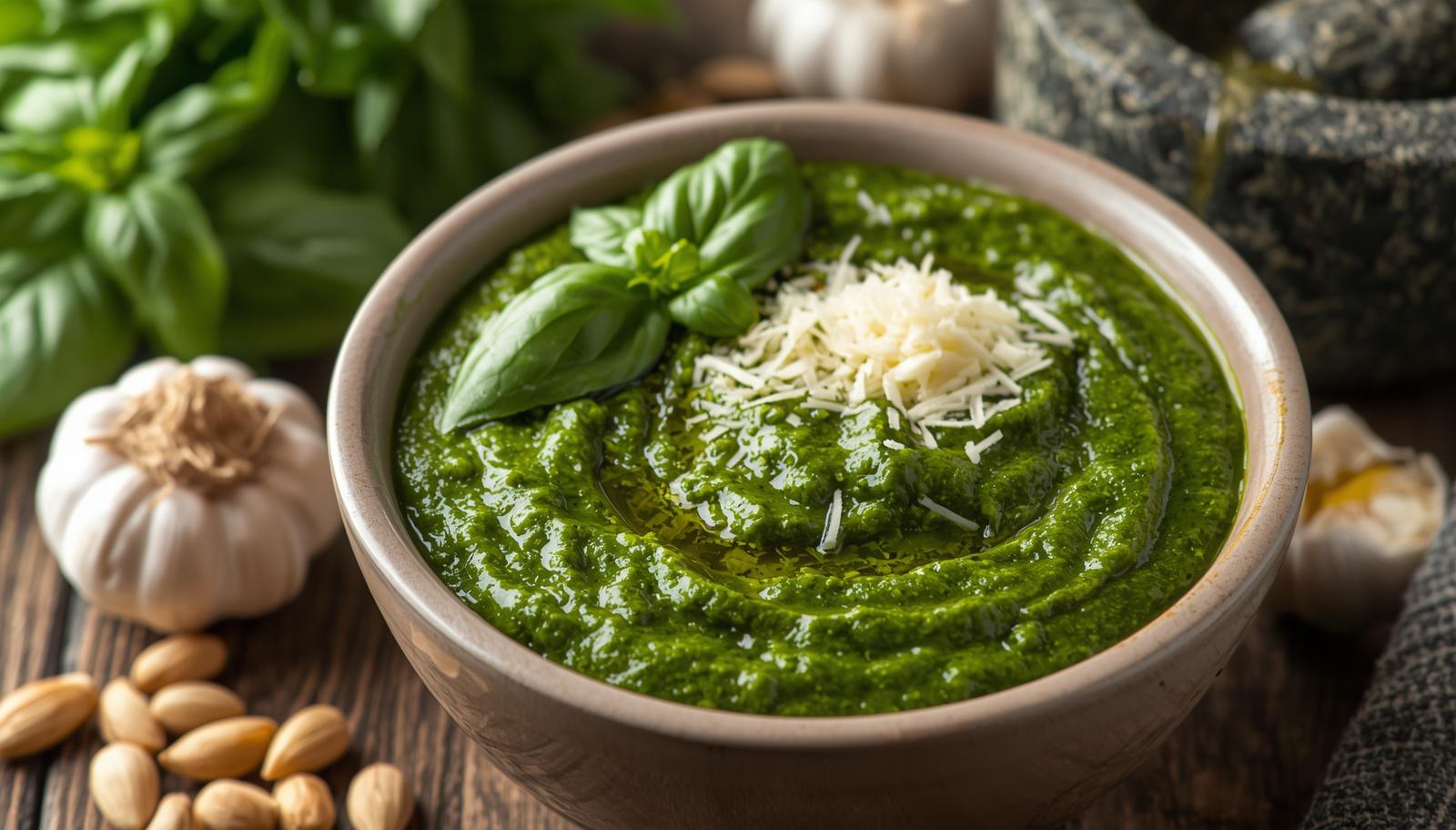
True Italian pesto—specifically Pesto alla Genovese—is a revelation compared to the jarred stuff. The goal is a vibrant, emerald-green sauce that tastes like a concentrated summer garden.
While a food processor is fast, the “secret” to the best texture is avoiding the heat generated by spinning blades, which can oxidize the basil and turn it bitter.
The Golden Ratio
The word pesto comes from the Italian word pestare, meaning “to pound.” Using a mortar and pestle is traditional, but whether you go old-school or high-tech, the ingredients remain the same:
- 2 cups Fresh Basil leaves (packed)
- 2 tbsp Pine Nuts (toasted lightly)
- 2 cloves Garlic (fresh, not jarred)
- ½ cup Extra Virgin Olive Oil (high quality is a must here)
- ½ cup Parmigiano-Reggiano (freshly grated)
- 2 tbsp Pecorino Romano (adds a necessary salty punch)
- A pinch of Kosher salt
The Step-by-Step Method
1. The Garlic and Nuts
Start by smashing your garlic cloves with a pinch of salt into a paste. Add the toasted pine nuts and crush them until they are broken down but still have a bit of texture.
2. The Basil
Add the basil leaves in handfuls. If using a food processor, pulse—don’t run it continuously. If using a mortar, use a circular grinding motion.
Pro-Tip: To keep the pesto bright green, some chefs “blanch” the basil in boiling water for 5 seconds and then shock it in ice water before drying and grinding.
3. The Cheese
Once the basil is broken down, stir in the grated cheeses. The Pecorino provides the salt, while the Parmesan provides the nutty depth.
4. The Emulsion
Slowly drizzle in the olive oil while stirring or pulsing. You want the oil to bind everything into a cohesive, creamy sauce.